The most positive influence is location and in terms of management, I believe it is the fertiliser management.
Most negative influence on orchard performance
The most negative influence is seasonal weather events. Particularly in spring.
General management
Pollination, fertiliser planning and spraying is contracted out. Remainder of work is completed by owners.
Canopy management
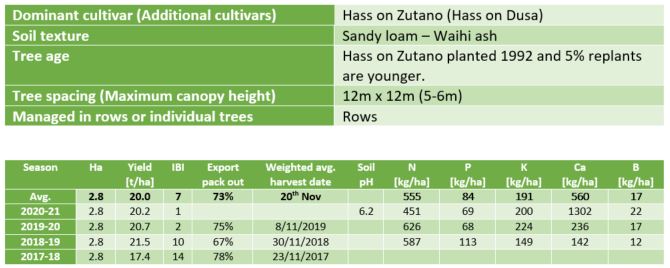
Tree spacing a bit variable but average is about 12m X 12m
Managed in rows
Max height of trees is 5-6m
Structural tree balance is the main priority when pruning followed by, managing crop load, access for picking and spraying, removing dead or diseased material and light interception.
Structural pruning is carried out once a year in autumn.
Flower pruning back to healthy leaf is carried out when trees are looking stressed
Fruit thinning is carried out as well when leaves are slow to develop or there is no leaf on limb supporting /protecting fruit.
About 25% or the canopy is removed when trees are pruned.
Soil and soil moisture management
Orchard is predominately sandy loam (Waihi ash).
Leaf litter, avocado pruning and shelter pruning are all used to mulch trees as well as other green waste from home and other sources.
Soil moisture is not monitored and the orchard is not irrigated.
Pollination
No pollinisers are present in the orchard.
Hives are brought onto the orchard at 1-5% flowering at a rate of 3-4 hives per hectare. Hives are located where ever is accessible (random) in the orchard.
Soil and fertiliser application
Soil and leaf tests are carried out once a year in May.
A consultant provided a fertiliser plan based on test results and crop loading.
All fertiliser applications are made via ground application.
Boron fertiliser is applied to the ground when deficient.
Calcium fertiliser is applied to the ground when deficient.
Fertiliser is applied about 8 times a year.
Tree health management
Trees are injected with phosphonate once a year in August with root testing conducted to verify application has been successful.